
 Search





 www.google.com
What you need to know about wires


| Their full legal name |
This must be an exact match to the name on their bank account.
|
| Their physical address |
This must be an exact match to the address on their account. (Note: PO Boxes will not be accepted as an address)
|
| Their financial institution name |
This must be the exact name of the financial institution receiving the money.
|
| Their financial institution country |
This must be the exact name of the country where the financial institution receiving the money is located.
|
| Their bank account number |
Depending where your wire transfer is going, this may be an IBAN (International Bank Account Number) or CLABE (Clave Bancaria Estandarizada)
|
| Their bank branch information |
This must include the full name, full physical street address, city, province and country or Remitter bank SWIFT code.
|
| Their bank identifier code |
If it's a Canadian bank or credit union this will be a route and transit number. It it's an international financial institution, it may be an ABA, SWIFT or other bank (branch) code.
|
| Additional recipient information (individuals) |
Phone number, email, birthdate, occupation, identification type and identification number.
|
| Additional recipient information (business) |
Phone number, email, nature or primary business, identification type and identification number.
|
| Your full legal name (individual) or the full legal name of your business |
This must be an exact match to the name on your bank account.
|
| Your physical address |
This must include your town or city, province, and postal code and must be an exact match to the address on your account. (Note: PO Boxes will not be accepted as an address)
|
| Your BVCU member (account) number |
Call us if you're not sure what your member number is.
|
| The full name and SWIFT code for your bank or credit union |
Bow Valley Credit Union Ltd.
SWIFT code: CUCXCATTCAL
|
|
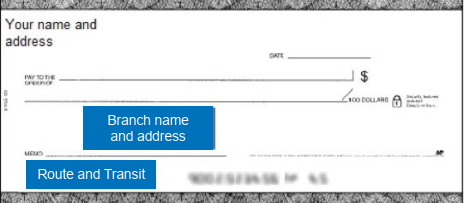
Branch information:
|
You can get this information by calling us or from your cheques. (Hint: you can find it on a void cheque in online banking)
|
| The name, physical address, SWIFT code and bank identifier or the beneficiary bank (Note: PO Boxes will not be accepted as an address) |
The bank of New York Mellon
1 Wall Street
New York, NY 10286 USA
SWIFT code: IRVTUS3N
ABA Number: 021000018
|
| The name, address, and account number of beneficiary account (Note: PO Boxes will not be accepted as an address) |
Custom House UK
2121 North 117th Avenue, Suite 300
Omaha, NE 68164 USA
Account Number: 8901309184
|
|
Your personal details and information about Bow Valley Credit Union
The sender's bank should put this information in the extra information or reference area on the wires form.
|
Further credit to:
Credit Union Central of Alberta (CCUA)
Bow Valley Credit Union Ltd.
|
Frequently asked questions
When sending or receiving a wire transfer for business or personal matters, it is important that specific and complete information is provided to the sending financial institution. Accurate information will:
- Eliminate the possibility of processing delays related to missing/incorrect data;
- Lessen risk that the payment will be rejected; and
- Satisfy regulatory requirements under anti-money laundering and anti terrorist financing laws and regulations
A physical address is the actual location of a home or business. In Canada, it must include a house or building number, street name or number, town or city, province and a postal code (if applicable). It can be the same as your mailing address if your mail is delivered right to your home or business. If your mail is delivered to a post office box or other location, then your mailing address is not your physical address. If you live on a Range Road you must also include your township or block number.
If your physical address is outside of Canada it must include the local equivalents of a Canadian address. For example, instead of province and postal code, a U.S. physical address must include the state and zip code. Physical addresses outside of Canada must also include the country.
Did you know? BVCU is required by law to know your physical address. It's all part of Canada's efforts to detect and deter money laundering and other crimes in our country and around the world.
You can get the details (name, address, phone number, route and transit) for your branch from your cheques. You can download a void cheque in online banking if you don't have any physical cheques.
- The branch name and address will be above the memo line.
- The route and transit will be in the series of numbers that run along the bottom. The route and transit for your BVCU branch will be five numbers followed by a dash (-) and 899. (e.g., 12345-899).
First, determine if this is required. If someone else has instructed you to send or receive the wire (perhaps on their behalf), that person is considered the third party and we need their information as well. For example, Sam sends a wire to his niece Jessica who needs money for school. Jessica's mom is out of town and couldn't get to the bank so she asked her brother Sam to send it on her behalf. In this scenario Jessica's mom is a third party because she instructed Sam to send the wire for her.
If a third party is involved, you'll need to gather the following information on them to include with your wire:
- full legal name
- physical address
- phone number
- email address
- birthdate
- occupation
- relationship of third party
(to person or entity who has sent or received a wire on their behalf)
In an effort to combat financial crime in Canada our federal regulator has implemented enhanced record keeping requirements for international Electronic Funds Transfers (wires) over $10,000 CAD. All financial institutions are required to comply with these regulations by obtaining the source of funds and the purpose of the transaction when sending or receiving international wires over $10,000.